Ever wonder if a 3/4″ copper compression union can stop leaks quicker than soldering or push-fit repairs? This overview highlights the 3/4″ Copper Compression Union as a dependable, contractor-grade plumbing connector. It is suitable for both homeowners and trade professionals. This fitting offers a fast repair option, often removing the need for a torch, specialty solder, or lengthy downtime.
Visit website of 3 4 Inch Compression Fitting
Its design is straightforward, featuring a nut and ferrule to create a tight, leak-proof seal on copper tubing. That simplicity makes it a popular choice, and wholesalers like Installation Parts Supply stock it for same-day shipping on urgent jobs.
The sections below take a closer look at how the 3/4″ copper compression union operates. We will cover its benefits compared with brass and push-fit alternatives and offer step-by-step guidance for a durable, long-lasting connection.
What Is A 3/4″ Copper Compression Union And How It Works
A 3/4 inch copper union is a straightforward copper pipe fitting used to join two pipe ends of the same nominal size without soldering. Its main parts are a union body, two nuts, and ferrules. This design is ideal for repairs, accessible joints, and installations where heat from soldering is not an option.
Definition of a compression union
A compression union forms a removable mechanical joint by compressing ferrules onto the pipe ends as the nuts are tightened. Those ferrules lightly deform and bite into the pipe outer diameter to create a tight seal against the union body. This fitting is often used by plumbers for quick replacements and easy-to-service connections in supply lines.
How the compression action creates a leak-proof seal
When each nut is turned, the ferrule is driven inward. The ferrule compresses evenly around the pipe and seats into the union body. Proper alignment and the recommended torque create a leak-proof connection suitable for potable water. If it is under-tightened, seepage may occur, but if it is over-tightened, the ferrule can deform and compromise the seal.
Why copper is used: durability and corrosion resistance
Copper’s natural resistance to corrosion and strong dimensional stability help give the 3/4 inch copper union a long service life. Compared with many plastics and certain metals, copper fittings resist degradation under normal water conditions. This dependable performance is one reason copper is favored for durable, long-term plumbing repairs.
| Feature | 3/4 inch copper union | Common alternative |
|---|---|---|
| Construction material | Solid copper | Brass or plastic |
| Seal type | Ferrule compression for a leak-proof connection | Soldered or push-fit sealing |
| Repair access | Can be removed for repairs | Push-fit can be removable, while soldered joints are permanent |
| Corrosion protection | High | Variable; brass is good, and some plastics are inert |
| Common uses | Quick fixes, line transitions, and accessible joints | Long runs, concealed soldered connections |
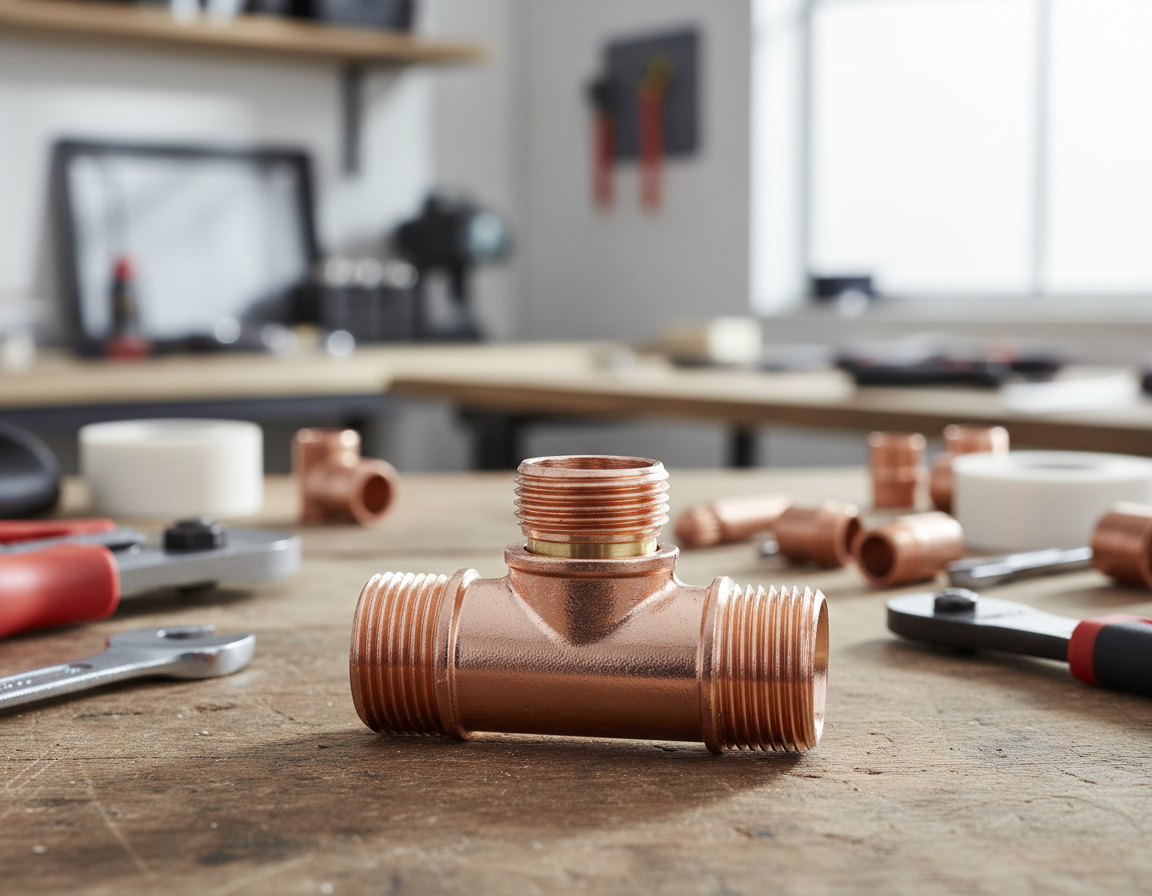
Benefits Of Using A Copper Pipe Fitting For Repairs
When selecting plumbing repair parts, the choice matters greatly for long-term performance. Copper pipe fittings are valued for their strength and proven durability in potable water and HVAC systems. A high-quality copper compression union ensures a durable joint, capable of withstanding mechanical stress and routine maintenance.
Copper union durability versus brass and plastic alternatives
Copper unions offer strong mechanical strength and resist deformation when torque is applied. In contrast to brass compression couplings from brands like Thrifco Plumbing, copper is more compatible with copper pipes. Plastic push-fit couplings, while quick to install, lack the heat resistance and long-term durability of copper, especially in high-use or high-temperature settings.
A corrosion-resistant union for long-term reliability
Copper resists many of the common forms of corrosion found in potable water systems. A corrosion-resistant union minimizes the risk of pinhole leaks and mineral attack when properly installed and matched with compatible metals. Routine inspections and proper water chemistry are important for helping the fitting deliver a long service life as a dependable plumbing repair part.
Where copper compression unions are commonly preferred
Copper compression unions are commonly chosen for residential potable water lines, HVAC supply and return lines, and commercial jobs where durability matters most. They are ideal for situations where disassembly or future service is anticipated, benefiting both contractors and homeowners. Wholesalers like Installation Parts Supply carry contractor-grade copper unions for these typical applications.
Materials, Sizes, And Compatibility Considerations
When selecting a plumbing connector, material and size are crucial. Copper unions are widely recognized for resisting corrosion and maintaining a clean look. It’s essential to check if the fitting is for nominal pipe size or outside diameter before installation.
3/4 inch copper union sizing is critical, especially when considering IPS or OD standards. A 3/4 inch copper union typically matches 3/4″ IPS, but copper tubing is sold by OD. Always review product specifications and measure the tube OD to avoid mismatches, especially in tight spaces.
Compatibility of compression fittings may vary by manufacturer and fitting pattern. Many compression unions work with hard copper tubing. However, for PEX or CPVC, use adapter fittings approved by the piping material’s maker to ensure warranty and code compliance.
The choice between a compression fitting and a soldered or push-fit joint depends on the project’s needs. Compression fittings are ideal for quick repairs, removable joints, or when heat cannot be applied. Soldered connections are better suited to permanent, tamper-resistant seals in hidden installations. Push-fit fittings offer tool-free installation but have limitations on pressure, temperature, and longevity.
Before buying, verify whether the fitting is a short pattern or a standard pattern so that clearance is adequate. Measure the nut and ferrule stack and check if the product lists compatibility as a specific combination, such as a brass coupling for IPS versus copper OD. That extra check can save you from needless trips and repeat orders.
| Factor | Compression Union | Soldered Joint | Push-Fit |
|---|---|---|---|
| Installation speed | Quick, using basic tools | Slower, requires torch | Fastest option, tool-free |
| Removability | Can be removed | Not removable | May be removable depending on model |
| Ideal use | Repairs, heat-sensitive areas | Permanent concealed lines | Quick installs, temporary or where approved |
| Compatible materials | Copper tubing, plus adapters for PEX/CPVC | Primarily brass and copper | Varies by manufacturer, with some support for PEX and copper |
| Sizing notes | Verify 3/4 inch copper union sizing (IPS versus OD) | Match the tube OD and wall thickness | Refer to the maker’s sizing guide |
Step-By-Step Installation Guide For An Easy Installation Fitting
Use this straightforward install guide to fit a 3/4″ copper compression union confidently. The steps below cover the tools, preparation, assembly, torque guidance, and leak checks needed for a reliable plumbing connector job. Parts are available from Installation Parts Supply or local plumbing wholesalers for contractor-grade quality and same-day pickup where offered.
Tools and prep
Collect two adjustable wrenches or a wrench with an adjustable spanner, plus a tube cutter, a deburring tool or file, and a torque wrench if exact tightening is preferred. Purchase ferrules, nuts, and the union body from Installation Parts Supply or a nearby plumbing wholesaler to ensure job compatibility. Have a clean rag and a flashlight nearby.
Preparing the pipe ends and parts
Use the tube cutter to make a square cut on the copper pipe. Remove burrs and sharp edges with the deburring tool so the ferrule can seat evenly. Make sure the pipe OD is free of oxidation, paint, and debris. Slide the nut onto the pipe with its threaded end facing the union, then place the ferrule on in the proper orientation before inserting the pipe into the union body.
Assembling the compression union
Push the pipe fully into the union body until it seats against the internal stop. Begin by hand-tightening both nuts. Use the adjustable wrenches to hold the union body steady while tightening the nut. Most fittings should be tightened according to the manufacturer’s specified turns past finger-tight, or to a stated torque value if one is provided.
Torque guidance and common mistakes to avoid
Do not overtighten, because too much force can deform the ferrule or pipe and cause leaks. If a torque wrench is available, use the manufacturer’s recommended torque setting. If no torque value is given, tighten in stages: wrench one to one-and-a-quarter turns past finger-tight, then test under pressure. Recheck the connection after the first pressurization.
Leak inspection and final steps
Turn the water pressure back on and inspect the joint for visible weeps. Use a dry cloth or paper towel to spot slow leaks around the compression fitting. If there is a minor weep, make a slight tightening adjustment. If the leak continues, relieve the system pressure and disassemble the joint to inspect or replace the ferrule and nut before putting it back together.
| Step | Action | Tip |
|---|---|---|
| One | Collect tools from Installation Parts Supply or a local wholesaler | Use contractor-grade ferrules and nuts for better durability |
| 2 | Cut pipe square and deburr | Make sure the OD is clean so the ferrule seals correctly |
| Step 3 | Place the nut first, then the ferrule, onto the pipe | Orient ferrule per manufacturer guidance |
| 4 | Push the pipe fully into the 3/4″ copper compression union, then hand-tighten | Tighten both nuts evenly by hand |
| Five | Tighten with a wrench to the required turns or torque | Prevent deformation by avoiding overtightening |
| Step 6 | Pressurize the system and check for leaks | A towel helps detect slow weeps; always relieve pressure before taking the joint apart |
Common Troubleshooting Tips And Quick Connect Fixes
Minor leaks around a compression joint usually appear as a steady drip at the nut or light weeping once the system is under pressure. First verify the line pressure is off and the area is dry. Look for visible damage to the pipe end, the nut, or the ferrule before assuming the body is at fault.
How to identify and repair minor leaks
For a basic quick connect fix, try tightening the nut to the manufacturer’s recommended turns. If leaking continues, shut down the pressure and disassemble the joint. Inspect the ferrule for nicks, flattening, or distortion and check the nut threads for wear. If the pipe end shows damage, cut it back, deburr it, and reassemble with a fresh ferrule and correct torque to reestablish a leak-proof connection.
Knowing when to replace ferrules or the full fitting
Replace the ferrules if they display visible distortion or cuts caused during installation. If the nut, body, or threads are corroded, stripped, or cracked, replace the whole compression union. If the same joint keeps leaking, it may point to a material or alignment problem, so it may be worth using a higher-grade contractor fitting from a reputable supplier or changing to a soldered joint for a more permanent leak-proof connection.
Preventive maintenance and avoiding overtightening or misalignment
Avoid overtightening during the initial assembly. Begin by hand, then finish with the recommended torque or the specified turns past finger-tight. Maintain proper pipe alignment so the ferrule seats evenly instead of biting at an angle. Inspect the joints after installation and then inspect them again under service pressure. Routine checks reduce the need for compression fitting troubleshooting and help detect early wear before a leak develops.
| Issue | Likely Cause | Quick Fix | When to Replace |
|---|---|---|---|
| Drip at nut | Loose nut or slight ferrule seating error | Tighten to manufacturer turns; retest under pressure | Ongoing drip after reassembly |
| Small leak after installation | Debris, a poor cut, or pipe misalignment | Depressurize, re-cut, deburr, re-seat ferrule | Ferrule shows distortion or cuts |
| Sudden leak under pressure | Nut cracking or stripped threads | Replace the nut, then retest | Replace the full fitting if the body or threads are damaged |
| Repeated leaks at same joint | Poor alignment or the wrong fitting grade | Realign the pipe and use the correct installation torque | Switch to higher-grade fitting or soldered connection |
Buying Guide: How To Select The Right Plumbing Connector From A Wholesale Distributor
Begin with the material specifications and certification details. Confirm that the plumbing connector is approved for potable water, backed by manufacturer certification, and offered with a contractor-grade warranty. Verify the pattern, whether short or standard, and confirm that ferrules and nuts are included. Matching the fitting to the pipe OD or IPS before purchase is crucial if you want to avoid returns.
Focus on corrosion-resistant features and reputable brands like Mueller Industries, NIBCO, and Viega. A well-made copper union will often perform better than lower-cost options in corrosive conditions. Consider the installation needs and compatibility with adapters, especially for mixed-material systems like copper-to-PEX.
Installation Parts Supply can expedite procurement for job sites by stocking contractor-grade copper unions, ferrules, nuts, and compatible adapters. They also offer same-day shipping for in-stock items when a fast turnaround is needed. For larger orders, contact sales or customer support and cross-check part numbers to confirm exact matches.
When judging value, look at lifecycle cost rather than only the upfront price. Brass compression couplings, including those from Thrifco Plumbing, may look less expensive online. However, longevity, corrosion resistance, and maintenance needs should also be factored into the decision. While a copper union may cost more upfront, it can provide lower lifetime costs in aggressive water conditions.
Keep in mind that manufacturer MAP policies may influence the discounts you see online. Retailers may withhold advertised reductions until checkout, so request a final quote for accurate comparisons. You should also ask wholesalers about contractor pricing, returns, and warranty handling to identify the real value of the offer.
If you want a quick comparison, use this short checklist:
- Potable water material certification
- Whether ferrules, nuts, and adapters are included
- Match with the correct pipe OD/IPS
- Brand reputation and contractor-grade rating
- Final price after MAP, shipping, and warranties
Use this checklist when sourcing from Installation Parts Supply or your local wholesale distributor. This approach ensures you choose a plumbing connector that balances performance, durability, and cost for your project.
Safety, Codes, And Best Practices For Plumbers And DIY Users
Working with a 3/4″ copper compression union requires close attention to safety guidelines and an understanding of local regulations. It’s crucial to verify the necessary requirements before starting any work. Even basic repairs should be handled carefully, particularly when regulated procedures must be followed.
U.S. local code considerations for compression fittings
In the U.S., different areas have their own rules for compression fittings. Many places permit these fittings on both cold and hot-water lines, provided they’re listed for safe use. However, some inspectors might limit certain ferrule types or demand brass components with specific certifications. Always check the local plumbing codes and what your inspector expects before installing a compression union.
Safe handling of copper fittings and working with pressurized systems
Always ensure the line is depressurized and drained before loosening any nut. Wear protective eyewear and cut-resistant gloves when cutting copper pipe. Keep a fire shield and a Class B-C extinguisher nearby if you choose to solder instead of using compression fittings. Although compression fittings remove the need for heat, they still demand a secure and tidy assembly.
When to call a licensed plumber instead of DIY repair
If the task involves gas piping, concealed lines, difficult access, or multi-story risers, it is usually best to call a licensed plumber. A licensed plumber can help ensure code compliance, choose the proper materials for safe use, and restore pressurized systems safely.
| Situation | DIY OK | Call a Licensed Plumber |
|---|---|---|
| Simple supply-line leak at an accessible union | Yes | No, unless the leak happens again |
| Work involving hidden walls or ceilings | No | Yes |
| Gas piping or combined mechanical systems | No, not for DIY | Yes |
| Uncertainty about local compression fitting codes | No, verify first | Yes |
| Replacing a simple plumbing repair part like a ferrule or nut | Yes, provided the correct tools are used | Yes, if the repair does not seal properly |
Conclusion
The 3/4″ copper compression union is a durable plumbing connector that works well for a wide range of repair and joining tasks. Its corrosion-resistant copper body and properly installed ferrule help ensure a leak-proof connection. That holds true when the pipe ends are properly prepared and the union is tightened to the correct torque.
Opting for a contractor-grade, easy installation fitting from trusted suppliers like Installation Parts Supply guarantees part quality. It also makes same-day shipping possible when time matters most. Before buying, compare copper unions against brass compression couplings and push-fit alternatives. This comparison helps determine the best choice based on compatibility, longevity, and job requirements.
Always follow local codes and use the proper tools during installation. Inspect joints after pressurization to confirm a secure, leak-proof connection. If ferrules or fittings show wear, replace them. For repairs beyond your comfort or code requirements, it’s wise to call a licensed plumber. This helps keep the system safe and compliant.